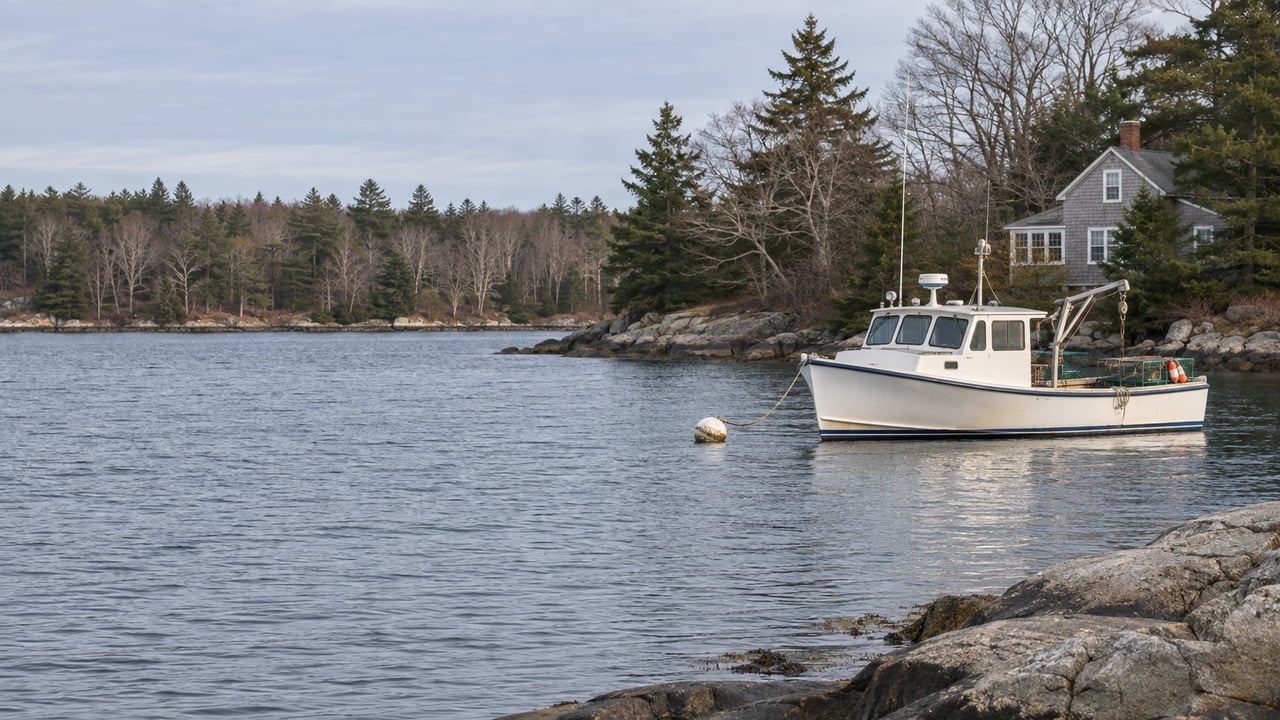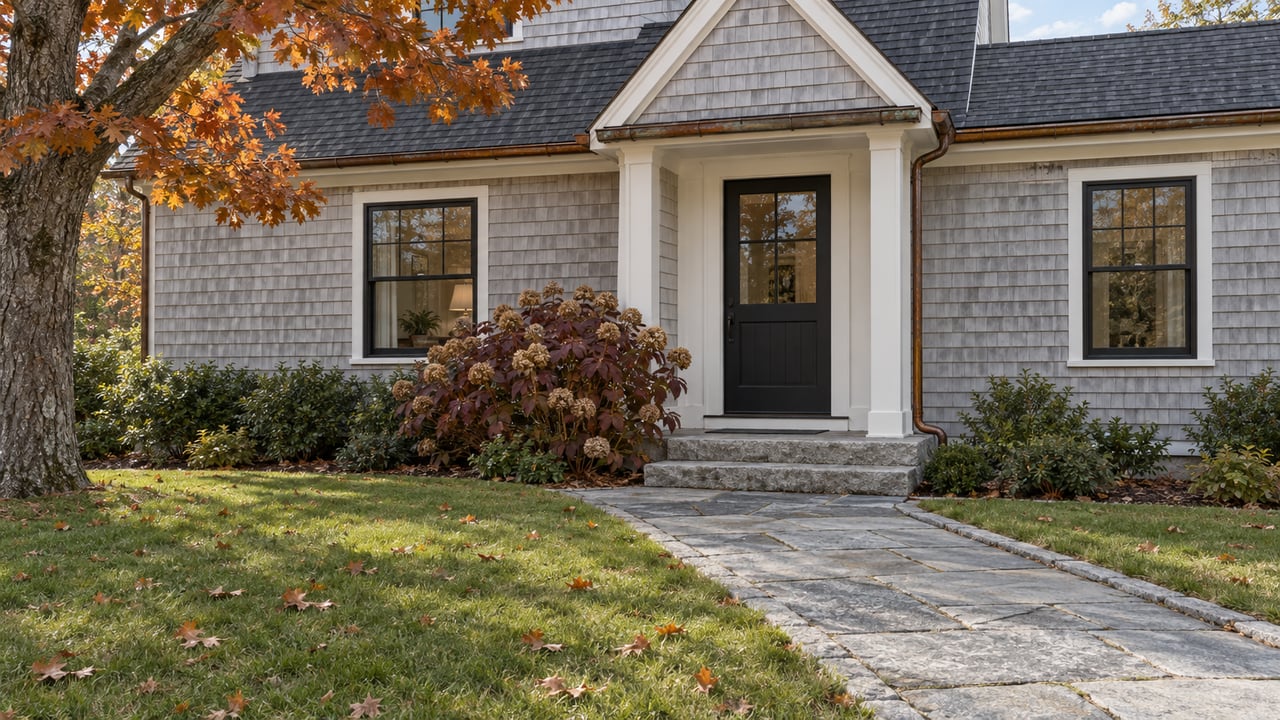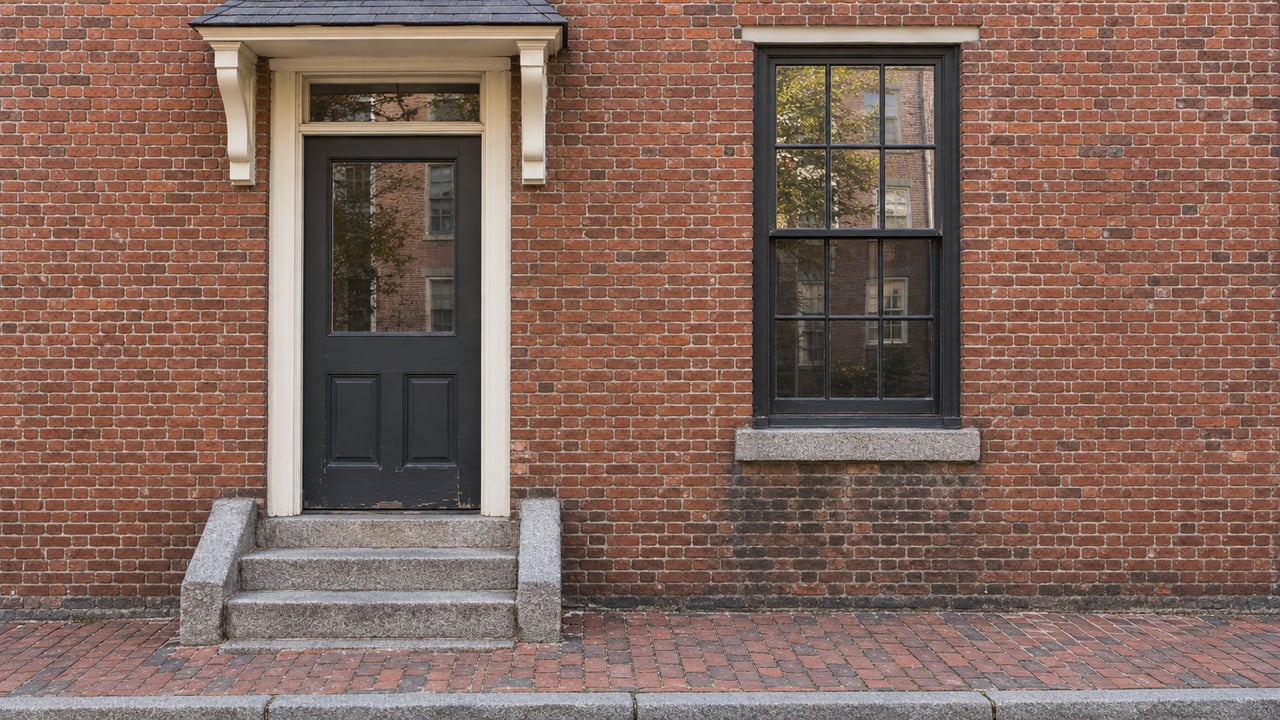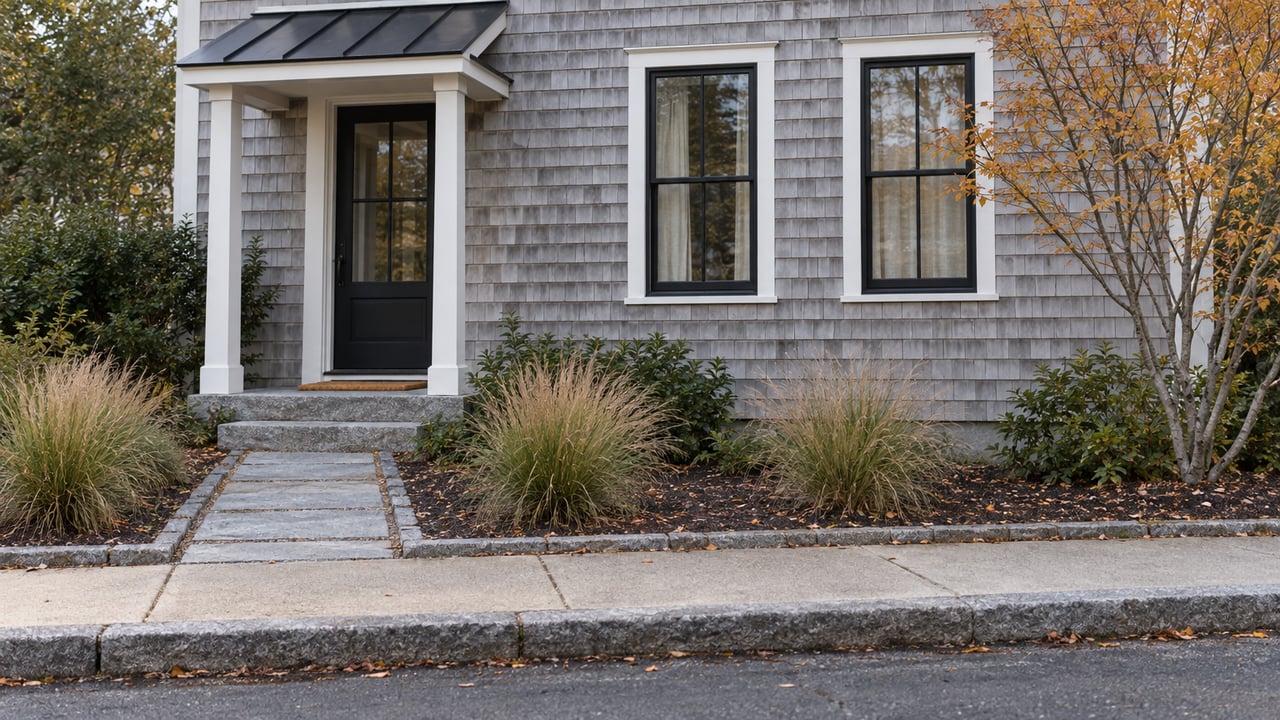
A buyer comparing two South Portland listings last month found something that didn't add up. One sat three streets back from Willard Beach, no water in sight, a modest Cape with a small yard. The other had a partial harbor view from a second-floor window, tucked into a quieter pocket near the Maine Mall. The harbor-view house was priced lower. The house with no view at all, but a five-minute walk to the sand, was priced higher, and it sold first.
That's not a fluke. It's how this city actually prices water.
The Number the Citywide Median Doesn't Explain
Over the three months ending August 2026, the median sale price across South Portland was $535,000, down 2.6% from the same stretch a year earlier, with homes selling in a median of 22 days compared to 29 days the year before. That's a city moving fast, not a city cooling off. One hundred and five homes sold in August 2026 alone, slightly more than the 104 that sold the same month a year earlier.
Now compare that citywide figure to Willard. Over the trailing twelve months, the median sale price in the Willard neighborhood, the pocket that includes Willard Beach and Willard Square, was $692,500, down about 2% year over year. The windows aren't identical, one is a three-month snapshot, the other a full year, so this isn't a precise dollar-for-dollar comparison. But the gap is large enough, and consistent enough with what's showing up on individual listings, that it's worth asking what's actually driving it.
The easy answer is "it's near the water." The more useful answer is what kind of access to water it actually is.
Public Water, Not Private Frontage
In a lot of coastal Maine towns, the water premium is a frontage premium. You're paying for a deed line that touches the tide, a private dock, unobstructed views nobody else can build in front of. That's the version most buyers arrive expecting.
South Portland's waterfront works differently, because most of it isn't private. Willard Beach itself is a four-acre municipal beach on Simonton Cove, with a seasonal bathhouse and a city-run water quality testing program, not a scattering of private beach rights. The Spring Point Shoreway links the beach to Spring Point Ledge Light, Fort Preble, and the Southern Maine Community College campus as a public walking route. Bug Light Park and Knightville Landing function as public boat access points rather than private marina slips. The Greenbelt Walkway stitches these pieces together into a shared trail network that runs along the water without requiring you to own any of it.
That changes what the premium is actually paying for. In Willard, Knightville, and Ferry Village, it's buying distance to a fixed set of public access points, the beach, the boat launch, the shoreway, the bridge into Portland. It has less to do with whether your own lot touches the water. A three-block walk to Willard Beach can carry nearly as much of that premium as a water view does, because the thing being priced is proximity to a shared amenity, not ownership of a private one. That's a genuinely different math than the oceanfront-lot pricing logic that governs a lot of the Maine coast, and it's worth knowing before you rule out a listing just because it doesn't have a view.
What Redbank and the Maine Mall Area Prove From the Other Direction
The cheaper end of South Portland confirms the same pattern by not having what the pricier end has. Redbank and the Country Gardens area, both closer to I-295, I-95, and the Portland International Jetport, are built around fast regional driving access rather than walkable proximity to the water or the bridge. They're convenient in a completely different way: quick highway access for a car commute, not a stroll to a beach or a bike ride over the Casco Bay Bridge into Portland's Old Port.
That's not a knock on those neighborhoods. It's a useful data point. If South Portland's price gradient were purely about coastal proximity, these areas would track more closely with the beach-adjacent ones, since none of them are more than a few miles from Casco Bay. Instead, they sit at the affordable end of the city's range, which suggests the premium isn't measuring distance to salt water in general. It's measuring distance to the small number of places where you can actually walk to it, or walk into Portland, without getting in a car.
The ADU Wrinkle Nobody Mentions Until Underwriting
Here's where the older housing stock in these walkable neighborhoods creates a real wrinkle for buyers trying to make the premium pencil out. A lot of homes in Willard, Knightville, and Meetinghouse Hill sit on small, older lots, the kind built before anyone was thinking about accessory dwelling units. South Portland's ADU ordinance, laid out in Chapter 27 of the city code, allows one accessory dwelling unit per lot with a single-family, duplex, or triplex structure. But the size caps scale with lot size: on parcels under 10,890 square feet, an ADU can't exceed 800 square feet or 90% of the primary dwelling's living area, whichever is smaller. On larger lots, the cap rises to the lesser of 10% of the parcel, 1,200 square feet, or 90% of the primary unit.
The detail that catches people off guard during due diligence isn't the size limit. It's this: According to the City of South Portland ADU Guidebook, South Portland's ordinance prohibits short-term rentals, anything under 30 days, in the ADU or in the primary dwelling once an ADU is on the property. If part of your plan for affording a Willard-area premium involves adding a small rental unit and running it as a nightly listing, that plan doesn't work here. The ADU math in South Portland is a long-term-tenant math, or a multigenerational-household math. It can still meaningfully offset a purchase price, just not on the timeline or income model some buyers assume going in.
Worth checking before you write an offer around it:
- Your lot size, since it affects whether an ADU can reach 800 or 1,200 square feet
- Whether the existing structure has room for one under, attached to, or beside it without triggering setback issues
- That any rental plan is built around long-term tenancy, not short-term stays
What's Coming to Mill Creek and Knightville
The other piece worth watching if you're weighing today's premium against tomorrow's is what's happening with supply. Mill Creek and Knightville have seen active discussion and approvals for denser mixed-use and workforce housing, the kind of development that adds condo and apartment inventory to exactly the walkable, bridge-adjacent area that currently commands the highest prices in the city. More supply in that specific footprint, if it materializes on the timeline currently being discussed, is the kind of thing that can narrow a premium over a few years without anyone's home losing value in absolute terms. It's a reason to ask your agent what's in the pipeline near a listing, not just what closed last quarter.
Does every home near the water in South Portland sell for a premium? Not automatically. The premium tracks walking distance to a specific set of public access points, the beach, the shoreway, the boat launches, the bridge into Portland, more than it tracks simple proximity to the coastline in general.
Can I run a short-term rental out of an ADU in South Portland? No. As noted above, city ordinance prohibits rentals under 30 days in either the ADU or the primary dwelling once an ADU exists on the property. Long-term tenancy or multigenerational use are the paths the ordinance is built around.
Is the price gap between neighborhoods like Willard and areas like Redbank likely to shrink? It's worth watching. Discussed development in Mill Creek and Knightville could add housing supply to the walkable core over the next few years, which is one of the few things that tends to soften a location-driven premium over time.
If you're comparing South Portland's neighborhoods against each other, or against a town like Cape Elizabeth where the water math runs differently, the details above are the kind of thing worth walking through before you write an offer, not after. McFarlane Field Associates knows this stretch of coast street by street, and we're glad to talk through what a specific address is actually pricing in before you commit to it.
This article is general information, not legal, tax or financial advice. Consult a qualified professional about your situation.