If you are trying to decide between waterfront or in-town living in Falmouth, you are really choosing between two different versions of daily life. One puts you closer to the harbor, boating, and coastal views. The other can make errands, commuting, and everyday routines feel a little simpler. This guide will help you compare both options, understand what the local market looks like, and narrow in on the kind of Falmouth lifestyle that fits you best. Let’s dive in.
How Falmouth Is Set Up
Falmouth is not a one-note market. The town stretches from the coastline to more rural inland areas, and about 12,755 residents are spread across 29.4 square miles. That means your day-to-day experience can change quite a bit depending on where you live.
In broad terms, buyers often look at Falmouth through three lifestyle zones: the waterfront, the Route 1 core, and quieter inland streets. The town’s planning documents support that pattern, with a walkable village center taking shape along Route 1 while inland areas remain more protected and less developed.
Falmouth also has a centralized civic feel. The public school district’s three buildings are located on one 125-acre campus near the center of town, which makes the middle of Falmouth an important reference point for many buyers.
Waterfront Living in Falmouth
For many buyers, waterfront living means the east side of town, often associated with Falmouth Foreside. The town describes this area along Foreside Road, or Route 88, as the east side commonly called Falmouth Foreside. It stands apart from inland Falmouth both visually and functionally.
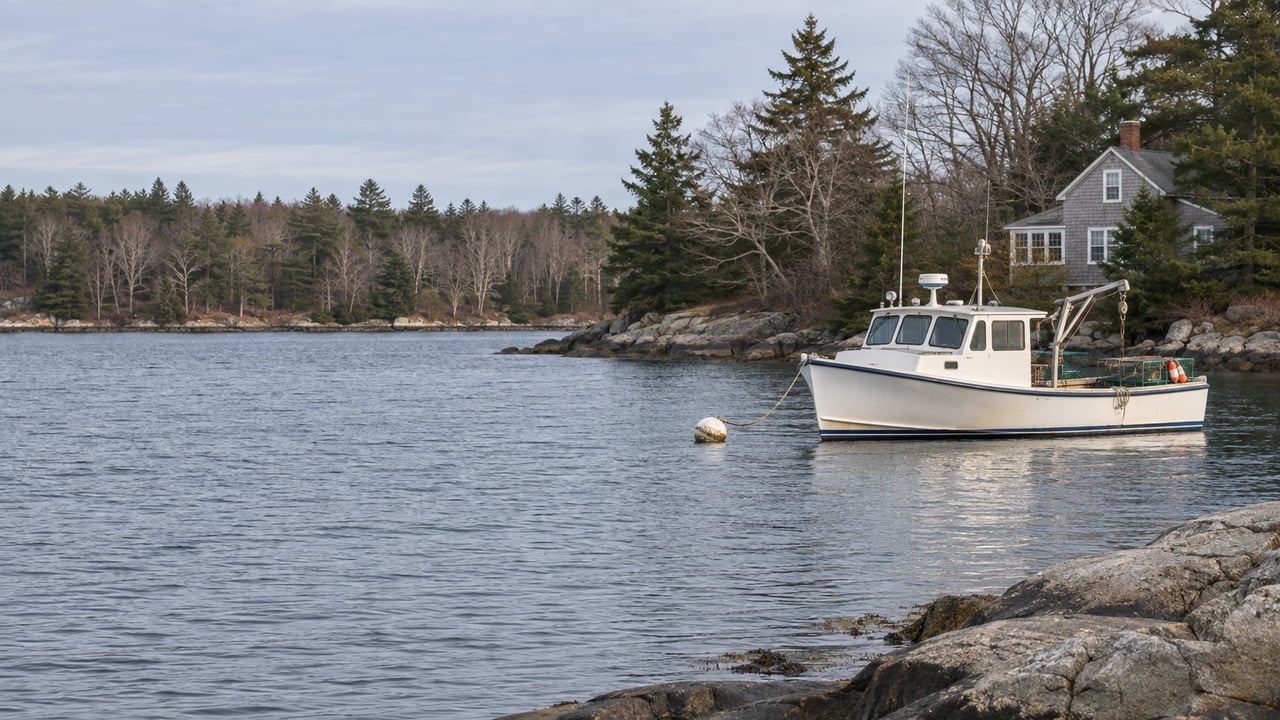
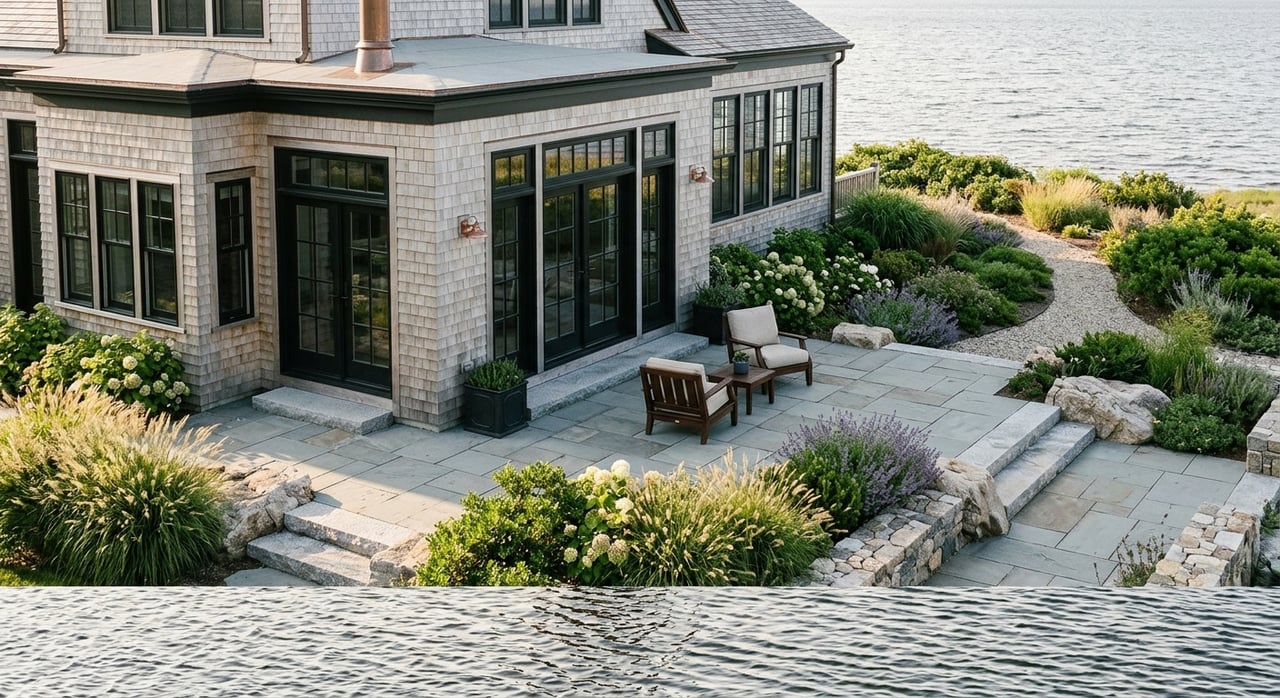
The appeal is easy to understand. Falmouth’s coastline is closely tied to boating, harbor access, and time outside on the water. If your ideal Maine lifestyle includes launching a boat, paddling, or being close to the shore, the waterfront side of town can feel like a natural fit.
What Waterfront Buyers Often Value
Waterfront buyers are often drawn to features like:
- Water views
- Closer access to boating and kayaking
- Proximity to marine amenities
- A stronger connection to the harbor setting
- The character of coastal residential streets
The town’s comprehensive plan notes a small group of marine-oriented assets that help shape this experience, including Handy Boat Marina, Portland Yacht Club, Dockside Grill, and Falmouth Town Landing.
Town Landing and Everyday Water Access
Town Landing is a major part of what makes waterfront living in Falmouth distinct. According to the town, it includes a public beach and boat launch, along with the largest recreational anchorage and mooring field in Maine and the largest north of Marblehead, Massachusetts.
That kind of access matters if being near the water is not just about the view, but about how you actually spend your time. At the same time, buyers should know that parking is limited, and the lower lot is reserved for residents with town-issued parking stickers.
Coastal Tradeoffs to Think About
The lifestyle benefits are real, but so are the practical considerations. Falmouth’s coastline is almost entirely residential, and coastal properties are subject to Shoreland Zoning Overlay regulations. The town also notes that much of the shoreline is vulnerable to sea-level rise, storm events, and climate change.
In simple terms, buying near the water may mean paying closer attention to property conditions, resilience, access, and long-term planning. For some buyers, that is well worth it. For others, it is a sign that in-town or inland living may offer a more straightforward ownership experience.
In-Town Living in Falmouth
If you care most about convenience, in-town living may be the better match. Falmouth’s Route 1 corridor is a key part of daily life and is being planned as a walkable village center and the heart of the community. That gives the more built-up core a different feel from the waterfront or rural sections of town.
This part of Falmouth can make it easier to stay connected to shopping, services, the school campus, and regional travel routes. For buyers who want efficiency in their daily routine, that can carry a lot of weight.
Commuting and Access
Falmouth is tightly linked to the greater Portland area. I-295, I-95, and Route 1 all pass through town, and Route 1 remains a major commuter corridor to Portland and communities to the north.
The town reports that roughly 5,400 employees commute into Falmouth and about 4,500 residents commute out. Census data shows a mean travel time to work of 22.6 minutes townwide, while the Falmouth census place, which can serve as a rough proxy for the more compact core, shows a 17.3-minute mean commute.
For many buyers, that difference helps explain the appeal of in-town living. If your week revolves around school drop-offs, work trips, errands, and regular access to Portland, location inside town can shape how easy those routines feel.
Schools and Centralized Daily Life
Falmouth Public Schools has three school buildings on one 125-acre campus in the center of town. Because of that setup, school access tends to be more of a townwide planning issue than a neighborhood-by-neighborhood one.
That does not mean every home feels equally convenient. Waterfront and inland households may still have different drive or bus times, but the central campus means many buyers naturally compare homes based on how easily they connect back to the middle of town.
Inland Living in Falmouth
Beyond the waterfront and the Route 1 core, Falmouth opens up into quieter inland areas. The town’s planning policies continue to emphasize protecting rural and undeveloped sections, which helps preserve a different pace and setting.
If you prefer more separation from traffic and a less built-up feel, inland streets may be worth a close look. These areas can offer a calmer backdrop while still keeping you within the broader Falmouth market.
The tradeoff is that daily logistics may take a little more planning. If quick access to coastal amenities or the center of town is high on your list, inland living may feel less immediate than either the waterfront or in-town core.
What the Housing Market Looks Like
Falmouth remains dominated by detached single-family housing. The town says more than 80% of housing units are single-family detached homes, only 8.6% are in multifamily structures with three or more units, and 14.2% of housing units are rentals.
That matters because most buyers in Falmouth are shopping in a market shaped by single-family inventory, not a large mix of condos, apartments, or dense multifamily options. The town also notes that the range of housing choices has not shifted much in response to demand because of land-use restrictions and cost challenges.
Price Signals Across Falmouth
Falmouth is an expensive market, and the pricing differences between lifestyle zones are meaningful. Redfin reports a March 2026 median sale price of $950,000 for Falmouth overall, with homes averaging 47 days on market.
In Falmouth Foreside, the median sale price was $1.8 million, with homes averaging 28 days on market and a median of $512 per square foot. That strongly suggests a premium for waterfront location, especially when a property includes views, access, or other coastal features.
Census Reporter estimates owner-occupied home values at $767,500 for Falmouth overall, $833,300 for the compact Falmouth core proxy, and $855,000 for Falmouth Foreside. These figures point in the same direction: both in-town and waterfront living sit at the high end of the local market, with true waterfront generally commanding the strongest pricing.
Sale Examples Show the Range
Recent sold examples also help show how wide the pricing spread can be. Selected Falmouth sales included properties at $500,000, $505,000, $600,000, $1.2 million, and $1.7 million.
Selected Falmouth Foreside sales included $685,000, $700,000, $960,000, $1 million, $1.6 million, and $1.795 million. These are only examples, not a full market survey, but they show how quickly value can rise with size, location, and coastal appeal.
Waterfront or In-Town: How to Decide
If you are early in your search, the clearest question is this: do you want the waterfront experience itself, or do you want easier daily logistics? That single question often helps buyers clarify their direction faster than price alone.
Choose waterfront living if you are drawn to:
- Boating, kayaking, and harbor access
- Coastal views and a shoreline setting
- A home that feels closely tied to the water
- A lifestyle where the waterfront is part of your routine
Choose in-town living if you are drawn to:
- Easier access to Route 1 and regional roads
- Simpler day-to-day errands and commuting
- Closer connection to the town center
- A more convenience-driven routine
Choose inland living if you are drawn to:
- Quieter streets and a less built-up setting
- More distance from the busiest travel corridors
- A rural edge within the Falmouth market
- A home search focused on pace and privacy over water access
A Smart Way to Narrow Your Search
In a town like Falmouth, it helps to search by lifestyle first and property type second. Start by thinking about where you want to spend your time on a normal Tuesday, not just what sounds appealing on a summer weekend.
You can also compare homes by asking a few simple questions:
- How important is water access versus water views?
- How often will you commute to Portland or beyond?
- Do you want quick access to the center of town?
- Are you comfortable with the added considerations that can come with coastal property?
- Would a quieter inland setting feel more relaxing, or less convenient?
Those answers can save you time and make your search more focused from the start.
Falmouth offers a rare mix of coastal access, a connected town center, and quieter inland settings, but those options do not live the same way. The best fit depends on whether you want your home to anchor you to the shoreline, simplify your routine, or give you a little more breathing room. If you want help comparing specific areas, pricing patterns, and property types in Falmouth, McFarlane Field Associates can help you sort through the details with clear, local guidance.
FAQs
What is the difference between waterfront and in-town living in Falmouth?
- Waterfront living in Falmouth is generally tied to coastal access, boating, views, and areas like Falmouth Foreside, while in-town living is more connected to Route 1, the central school campus, and everyday convenience.
Is Falmouth Foreside more expensive than other parts of Falmouth?
- Recent market data shows a higher median sale price in Falmouth Foreside than in Falmouth overall, which suggests a meaningful premium for waterfront location and coastal features.
What makes in-town Falmouth convenient for buyers?
- In-town Falmouth offers easier access to Route 1, regional commuting routes, shopping, services, and the centralized school campus, which can make daily routines more efficient.
What should buyers know about waterfront homes in Falmouth?
- Buyers should know that waterfront homes in Falmouth may offer strong boating and shoreline access, but coastal properties can also involve shoreland zoning, limited public parking access in some areas, and more exposure to weather and shoreline resilience concerns.
What types of homes are most common in Falmouth?
- Falmouth’s housing stock is primarily made up of detached single-family homes, with a much smaller share of multifamily and rental housing.
Is inland living in Falmouth a good option for buyers?
- Inland living in Falmouth can be a strong fit if you want a quieter setting and a less built-up feel, though it may trade some convenience and coastal access for a more rural atmosphere.