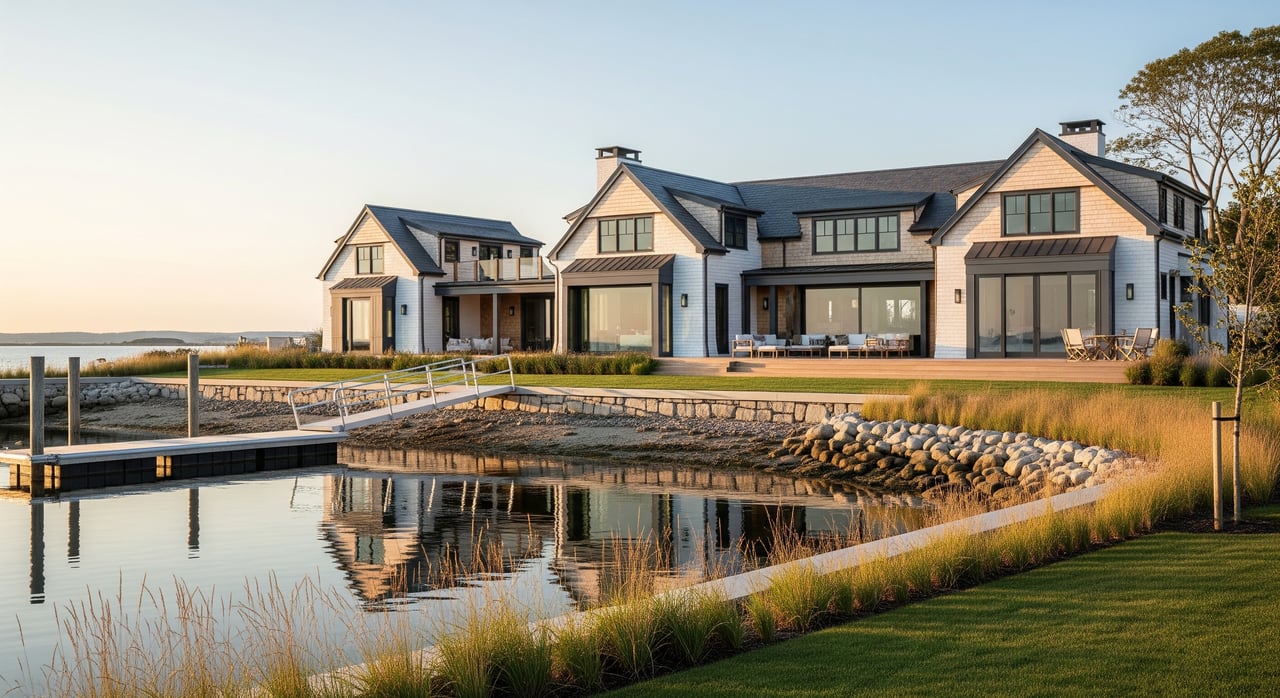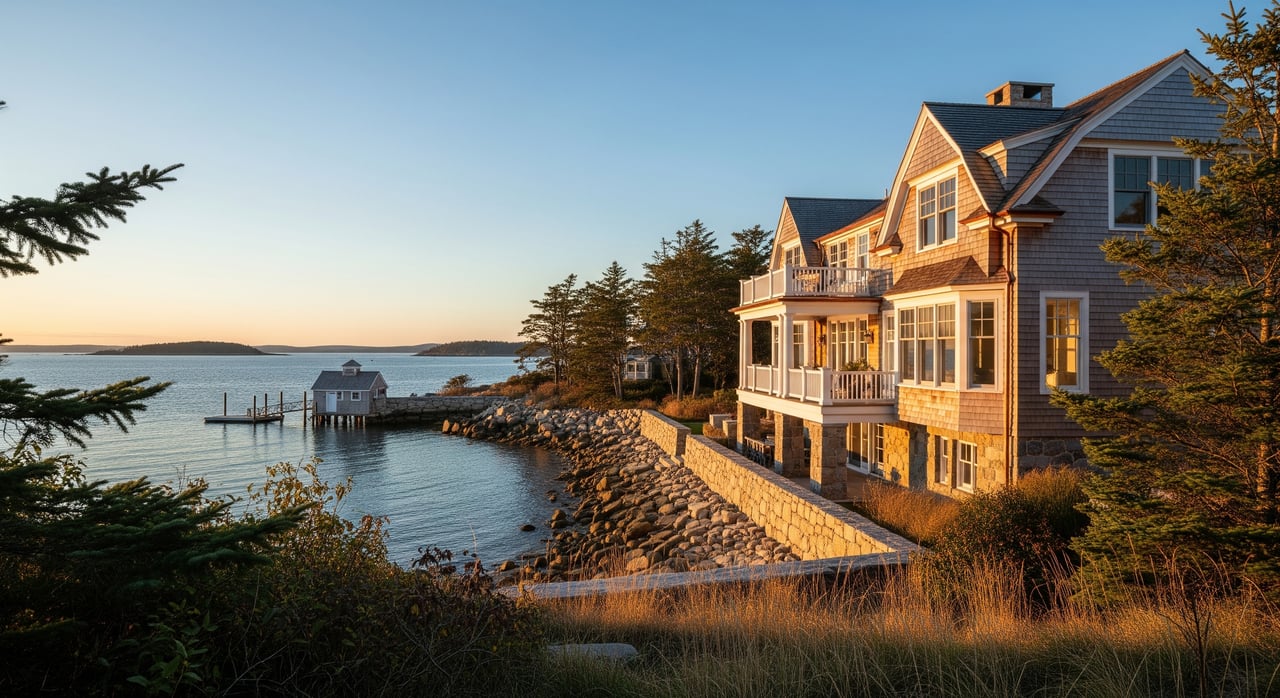
Shopping for a home on the Falmouth coast and hearing the term “jumbo loan”? You are not alone. With many coastal and high-end properties, financing can look different than a typical mortgage. In this guide, you’ll learn what a jumbo loan is, how it applies in Falmouth, what lenders expect, and the coastal details that can affect your budget and timeline. Let’s dive in.
What is a jumbo loan in Falmouth?
A jumbo loan is a mortgage that is larger than the conforming loan limit set each year by the Federal Housing Finance Agency. Loans above that limit are not purchased by Fannie Mae or Freddie Mac, so lenders treat them as portfolio or privately placed loans. You can review the current county-by-county limits on the FHFA’s official page for the conforming loan limit.
For 2024, the baseline single-family conforming limit in most counties is 766,550 dollars. Whether a loan is considered jumbo in Falmouth depends on the current FHFA limit for Cumberland County in the year you buy. If your requested mortgage amount is above that county limit, it is a jumbo loan.
What this means for you: Falmouth’s waterfront and luxury homes often require financing that exceeds conforming limits. Before you shop, compare your likely loan amount to the latest FHFA limit to see if you will need jumbo financing.
When you may need jumbo financing
You are more likely to need a jumbo loan if:
- You are buying a waterfront or high-value single-family home where the purchase price minus your down payment results in a loan above the county conforming limit.
- You are purchasing a second home or investment property where lenders often require larger down payments, which can influence the loan structure.
- You prefer to minimize cash at closing and keep a larger loan balance, which can push you into jumbo territory.
Jumbo loan basics lenders expect
Jumbo underwriting is more detailed than conforming. The Consumer Financial Protection Bureau offers a helpful overview of jumbo mortgages, including how lenders evaluate applicants. See the CFPB’s explanation of jumbo mortgages.
Credit score and credit history
Most jumbo programs favor strong credit. Many lenders look for FICO scores around 700 to 740 or higher for best pricing. Some programs allow mid-600s with stricter terms and higher costs. Lenders also review recent credit events closely.
Down payment and loan-to-value
Down payments commonly range from 10 to 20 percent for a primary residence, and 20 percent or more often earns better pricing. Second-home and investor loans may require 25 to 30 percent or more. Your target down payment will guide which lenders, rates, and products are available.
Debt-to-income ratio and reserves
Many jumbo programs prefer debt-to-income ratios at or below the mid-40 percent range. Lenders often require cash reserves equal to 6 to 12 months of total housing payments. Second homes and investment properties may need more.
Documentation and verification
Expect full documentation: W-2s or 1099s, recent pay stubs, 2 to 3 months of bank and investment statements, and employment verification. Self-employed buyers should be prepared to provide 2 or more years of tax returns and possibly year-to-date profit-and-loss statements.
Rates, pricing, and mortgage insurance
Jumbo rates can be similar to, or higher than, conforming rates depending on market conditions and your profile. Private mortgage insurance is rarely used on large jumbo balances. Lenders typically require a larger down payment or, in some cases, structure a second lien to manage risk.
Loan types and where to find them
You will see both fixed-rate and adjustable-rate jumbo products with standard terms like 30, 20, or 15 years. Portfolio lenders, private banks, local credit unions, and nonbank mortgage companies all serve jumbo borrowers. Underwriting rules and pricing can vary widely, so it pays to compare.
Coastal factors that change the math
Buying on the Maine coast adds a few extra steps. These details can affect your ability to qualify and your long-term carrying costs.
Flood zones and flood insurance
Some coastal properties fall within FEMA Special Flood Hazard Areas, which can require flood insurance for a mortgage. Start by checking the property’s zone at the FEMA Flood Map Service Center. If flood coverage is required, get quotes early. Premiums and policy structure can change your debt-to-income ratio and overall affordability. For general background on coverage, review FEMA’s page on flood insurance information.
What to know: Lenders will verify adequate flood coverage before closing. Elevation certificates, prior flood claims, and the property’s mitigation features can affect eligibility and cost.
Appraisals for unique waterfront homes
High-value and unique homes often require a more complex valuation. You may see longer appraisal timelines, higher appraisal fees, or a requirement for a specialty appraiser with coastal experience. Plan for this in your contract timeline, and order your appraisal promptly once your lender allows it.
Condos, second homes, and project reviews
For condominiums, lenders may have stricter project-level requirements. Expect project documents, insurance summaries, and reserve detail requests. If you are buying a second home, anticipate higher down payment and reserve requirements than for a primary residence.
Insurance and carrying costs in Maine
Wind, flood, and homeowners insurance can be higher for coastal properties. Get quotes early and ask about deductibles and exclusions. For state-level guidance and consumer resources, consult the Maine Bureau of Insurance. Lenders evaluate total monthly obligations, so accurate insurance estimates help you avoid surprises.
Taxes and maintenance considerations
Property taxes and seasonal coastal maintenance can impact your budget. Think about costs like seawall upkeep, stormproofing, and shoreline work if applicable. These items do not just matter after closing. They also affect how you and your lender view affordability.
Your Falmouth jumbo loan game plan
Use this step-by-step plan to stay ahead of the process.
1) Confirm whether your loan is jumbo
- Check the latest county limit on the FHFA’s page for conforming loan limits.
- Estimate your loan amount by subtracting your down payment from your target purchase price.
2) Get preapproved with a jumbo-capable lender
- Choose lenders that actively offer jumbo programs and have experience with coastal properties.
- Ask about maximum loan-to-value, reserve requirements, rate lock policy, and appraisal timelines.
3) Gather your documents early
- Two years of tax returns if self-employed; recent W-2s or 1099s; recent pay stubs; 2 to 3 months of bank and investment statements.
- Explanations for large deposits and clear documentation of assets for reserves.
4) Compare three lender options
- Include a mix of a national lender, a local bank or credit union, and a mortgage company or private bank.
- Compare more than rate. Review fees, appraisal process, documentation flexibility, and experience with luxury or waterfront properties.
5) Check flood zone status and obtain insurance quotes
- Look up the property at the FEMA Flood Map Service Center and get flood and homeowners quotes early.
- Ask your insurance agent about wind coverage, deductibles, and any coastal exclusions.
6) Budget time for appraisal and inspections
- Expect potentially higher appraisal fees and longer lead times for unique properties.
- Consider specialty inspections such as seawall, shoreline stabilization, or septic if applicable.
7) Plan your closing timeline
- Jumbo loans can take 30 to 45 days or more depending on complexity.
- Submitting a complete file up front and responding quickly to lender requests can help shorten the process.
8) Consider interim and alternative strategies
- If you are moving up from another home, you might explore bridge financing or a home equity line of credit to bridge timing.
- If you can make an all-cash offer, you can often add financing later, but discuss the timing and terms with your lender before you go under contract.
Program limits for FHA and VA
If you are exploring government-backed options, be aware that these have their own limits and rules. You can look up county loan limits for FHA through the HUD FHA loan limit lookup tool. For veterans, the VA offers powerful benefits and jumbo-capable loans through private lenders, subject to program rules and entitlement. See the VA’s overview of home loan benefits and basics, then speak with a VA-approved lender about your specific situation.
Bringing it all together
Buying in Falmouth’s coastal market often means working with larger loan amounts and a few extra layers of detail. When you understand the current county limit, lender expectations for jumbo borrowers, and coastal insurance and appraisal factors, you can shop with confidence and write a stronger offer.
If you are considering a high-value purchase or second home in Falmouth, you do not have to map it out alone. Our team guides you through local pricing, insurance questions, lender introductions, and a timeline that fits your goals. Reach out to McFarlane Field Associates to start a clear plan for your coastal home search.
FAQs
What is a jumbo loan and how is it set?
- A jumbo loan exceeds the FHFA’s county conforming loan limit; if your loan amount is above Cumberland County’s current limit for the year you buy, it is considered jumbo.
Do jumbo loans always have higher interest rates?
- Not always; pricing changes with markets and your profile, and well-qualified borrowers sometimes see jumbo rates that are comparable to conforming.
How do flood zones affect a Falmouth mortgage?
- If a property is in a FEMA Special Flood Hazard Area, lenders typically require flood insurance, which affects your monthly costs and qualification.
How much down payment and reserves will I need?
- Many lenders expect 10 to 20 percent down for primary homes and 6 to 12 months of payment reserves, with higher requirements for second homes or investments.
Can I use FHA or VA to buy a higher-priced Falmouth home?
- FHA and VA have program-specific limits and rules; check HUD’s FHA limit tool and the VA’s home loan guidance, then consult a lender about options.
How long do jumbo closings take in coastal Maine?
- Plan for about 30 to 45 days, with timing influenced by appraisal complexity, insurance documentation, and how quickly you can provide complete records.